As margins get tighter, more Nebraska hospitals consider 'Rural Emergency Hospital' model
By Macy Byars, Reporter Nebraska Public Media News
As soon as Sam Pennington became CEO of Garden County Health Services, he had a big challenge to tackle: how to keep the hospital open.
“[Garden County] is a very geographically big county with a small population,” Pennington said. “Having a hospital available is something that's hard to sustain long term, just because your volumes are going to be low.”
With few patients to bring in consistent revenue, the hospital was struggling financially.
“We would sometimes have two [patients] at a time, and then not have one for two or three months,” Pennington said. “Those peaks and valleys in reimbursement – it's hard to keep on top of your revenue cycle and your accounts payable.”
But having a hospital in the community mattered to people it serves and to Pennington.
“If they're able to be cared for in their community or close to their community, they don't have to go to Denver or Kearney or wherever the next largest hospital is going to be,” he said.
Pennington and the hospital board considered its options, and landed on a transition to a Rural Emergency Hospital, or REH.
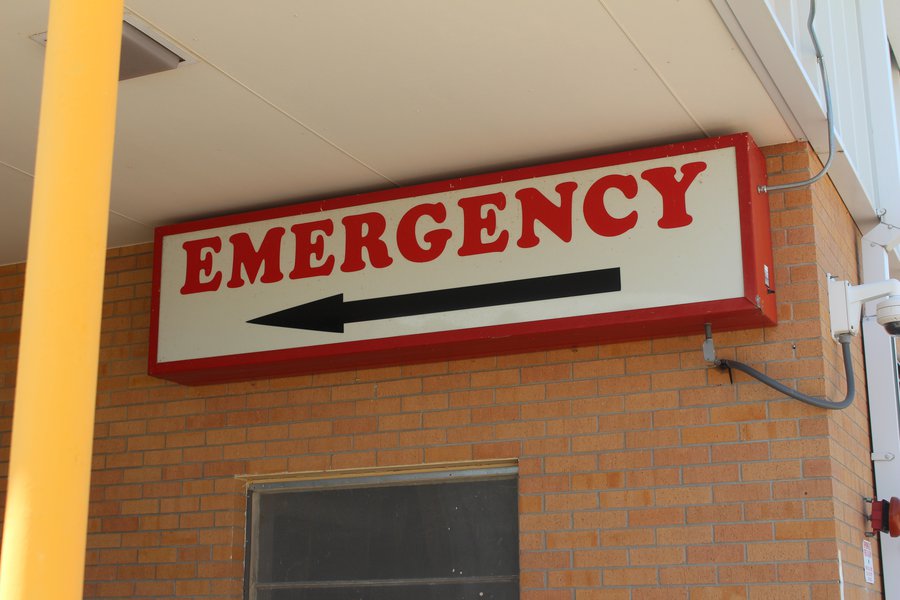
“A Rural Emergency Hospital, just kind of by its definition, is a federally subsidized emergency room and observation,” he said.
The designation – created in 2021 – is meant to keep small hospitals in rural areas from closing and preserve base-level emergency services. It’s an option that more Nebraska hospitals have chosen or are considering now that many are facing tighter margins.
The Nebraska Rural Health Association has performed audits on hospitals to see if they’d be a good fit for Rural Emergency Hospital conversion. Nine hospitals in Nebraska could benefit, especially as federal cuts to Medicaid affect reimbursements to hospitals and access to healthcare.
But this move for GCHS means it can only treat emergency cases and hold people for short observations. They cannot have inpatient beds for long-term, acute care stays or “swing” beds for patients not well enough to return home.
After the transition, GCHS started receiving a stipend from the government.
“It's just under $300,000 a month, and that helps to bring some stability to our revenue cycle,” Pennington said.
It can still provide outpatient care services as a revenue stream. The designation also gives a slightly higher reimbursement for some outpatient services compared to other hospitals.
Pennington said providing all the outpatient services people want can be challenging at times.
“No matter what three-letter acronym you put in front of the hospital, it's a logistical challenge to get specialists like cardiology, endocrinology, pulmonology, whatever one you want to list,” he said. “It's difficult to get them out here.”
Pennington said the hospital was already running a pared-down operation, and day-to-day operations haven’t changed much since the switchover in January 2026.
Alice Lee Patterson hasn’t noticed much of a change either. She’s a resident of the nursing home attached to the hospital.
“If I had to go someplace else, my kids wouldn't get to see me very often. This way – they live in Garden County – they can see me every other day or every day if they needed to,” Patterson said.
She’s lived in Garden County her whole life. Staying in the nursing home, she lives with friends, acquaintances and old classmates she recognizes from around town.
“We want to keep our hospital and our nursing home – very much so,” Patterson said.
Pennington said some community members were worried that they would lose access to regular care at the hospital, but most realized the alternative could be losing the whole hospital someday.
“This is a community of ranchers and farmers. The numbers make sense. It's not sustainable, so I think they accepted it.” he said.
Jed Hansen is the President of the Nebraska Rural Health Association. He said running a rural hospital can be a tough business.
“Most of our hospitals run at a margin of 1-2%. In almost all cases, they are either a nonprofit organization or they're a nonprofit governmental organization,” Hansen said. “There's not exorbitant amount of money that these hospitals are bringing in. They can't – and don't – by design.”
A 2025 report from the NRHA says 68% of hospitals in Nebraska are considered rural. Nationwide, about a third of hospitals are in rural areas.
The distance from a rural community to a hospital can be the difference between life and death for some patients.
“Miles matter. It comes down to drive time,” Hansen said. “How close do I want to be to a hospital if either I'm having a heart attack or my loved one is having a heart attack?”
When patients are further away from hospitals, they also seek primary and preventative care services less.
“Should your zip code determine the level of access and the level of care that you have available to you? It comes down to that,” Hansen said. “When we talk about retaining essential services, when we talk about keeping hospitals open, it's about keeping people alive and keeping people healthy in those communities."
Staffing shortages, federal Medicaid cuts and issues recruiting specialists loom over hospitals already struggling financially.
The Nebraska Hospital Association released data earlier this year showing 2026 would be a tough year for all hospitals – including their rural members. About 55% reported their current fiscal year will be “challenging” or “very challenging.”
The Nebraska Legislature did expand Medicaid reimbursement in 2024, but Hansen said he worries the federal cuts and added work requirements will further wear on rural hospitals.
“We believe there’s going to be a disproportionately high number of rural residents – especially in that Medicaid expansion population – that will potentially lose their coverage,” Hansen said. “If they're uninsured, it will create additional stress on them. They'll likely defer care, and then when they actually do need care, it will be a more expensive form of care, and then our hospitals will be left with providing uncompensated care. That's not a good recipe for success for anyone.”
Hospitals typically eat the cost of uncompensated care and do not receive reimbursements or insurance payments.
The REH designation is open to Critical Access Hospitals (CAHs). There are 61 in Nebraska.
“The modeling that we did a couple of years ago showed that there could be as many as 11 facilities that could find financial benefit with conversion over to REH,” he said.
Two of those were Nebraska’s existing REHs in Garden County and the southeastern town of Friend. That leaves nine more on the edge of a decision.
Friend Community Health Services converted in early 2024. It was the 21st hospital in the U.S. to make the switch. There are now at least 44 REHs in the country.
Chief Operating And Clinical Officer Amy Thimm said the payment from the federal government didn’t fix all the problems at the Friend hospital.
“You still have to be responsible to the community, responsible to the payment you're getting, but live on top of that. It's a balance, and you've got to be ready to pivot,” she said.
For example, they are still having trouble getting specialists to the hospital.
“We tried numerous things – specialty clinics, services – and it doesn't always pan out,” Thimm said. “Now, we are down to ‘What do we actually need to do? What's above and beyond versus what is just what we need for now?’”
They’ve focused on vaccination clinics, school physicals and community programs. The staff is also smaller now, and Thimm said the transition made them a close-knit group.
“We all wear so many hats that it took a while to get used to,” she said. “Figuring out your people and their skills and their motivations – that's been a whole different day-to-day for us, but it's coming together.”
Though it hasn’t fixed all the problems of running a rural hospital, Thimm encouraged other hospitals to explore the designation and seek an assessment of their finances.
“If I were on a board, I'd want that assessment, and then your community voice – those are the main things,” she said.
The Rural Health Redesign Center helps hospitals transition to the REH model. It conducts financial assessments and gives specialized recommendations for each hospital.
Chief Administrative Officer Anna Anna with the RHRC said migration out of rural communities and ongoing financial struggles have caused more hospitals across the country to reach out about the REH model.
“Education and resources are provided along with financial feasibility analysis, to help inform decision making,” Anna wrote in a statement to Nebraska Public Media News. “The technical assistance provided to each interested hospital is at no cost to the facility, regardless of whether they pursue the conversion process or not.”
Sam Pennington is weighing all the possibilities and considerations to come as Garden County Health Services settles into its REH transition. He has a lot of other work stacking up too. There are grants to apply for. The system for dispensing medication needs updated software. The building needs a new HVAC system too, and some of the equipment needs maintenance.
“Our infrastructure is aged, and a lot of it needs repair,” Pennington said. “It's not pulling apart, pulling apart. But, we have a lot of… original items.”
Those 1960s-era “originals” are still serving patients, and Pennington said he hopes becoming an REH will keep the hospital open for decades to come.
“This is not necessarily the move that everyone wanted, but I think overall, with the focus on keeping care in the community, this was viewed as a long-term sustainable option,” he said.
Learn more from Nebraska Public Media.